

Welcome to the first episode of Wicked Good Pulls, your go-to podcast for sports card collecting insights! Hosts Mike ("Retro Ripping") and Matt ("Coach Coops") dive headfirst into the exhilarating, sometimes bewildering, world of sports card collecting and selling. And who better to drag along for the ride than their brother Joe, still trying to grasp why two grown men are "filling their basements with kindling."
From obsessing over a Whatnot seller letting Michael Jordan cards go for a steal to grappling with auction psychology and the risks of "Max Shipping," this episode is packed with insights, laughs, and plenty of trading card-related banter. Let's unpack some of the key takeaways for sports card collectors and sellers!

The Psychology of the $1 Start on Whatnot for Sports Cards
Mike kicks off the episode with a fascinating observation from a Whatnot show. A new seller, clearly still fumbling with the platform, was moving Michael Jordan base cards for $6-$7 each, despite lower comps. This sparked a discussion on the perplexing psychology of auction bidding, especially with that tempting $1 start for sports card singles.
Why Do $1 Whatnot Card Starts Work (Sometimes)?
- The Illusion of a Steal: The low entry point draws bidders in for sports card breaks and singles. Buyers feel like they're getting a deal, even if the final price surpasses typical comps.
- Bidding Momentum: Once a bidding war starts on Whatnot, the competitive instinct takes over. Buyers might overbid to 'win' the item, rather than focusing purely on the actual card value.
- Seller Novice Advantage: Ironically, the new seller's inexperience might have worked in their favor. Lack of smooth transitions or high-pressure tactics could have made buyers feel more at ease, leading to less scrutiny on card prices.
It's a delicate balance for Whatnot sellers: use the $1 start to generate excitement and bidders, but risk cards selling for less than expected. The key is understanding your audience and the specific dynamics of each collectibles selling platform. Strategic use of the $1 start can be a great Whatnot selling strategy for sports cards.
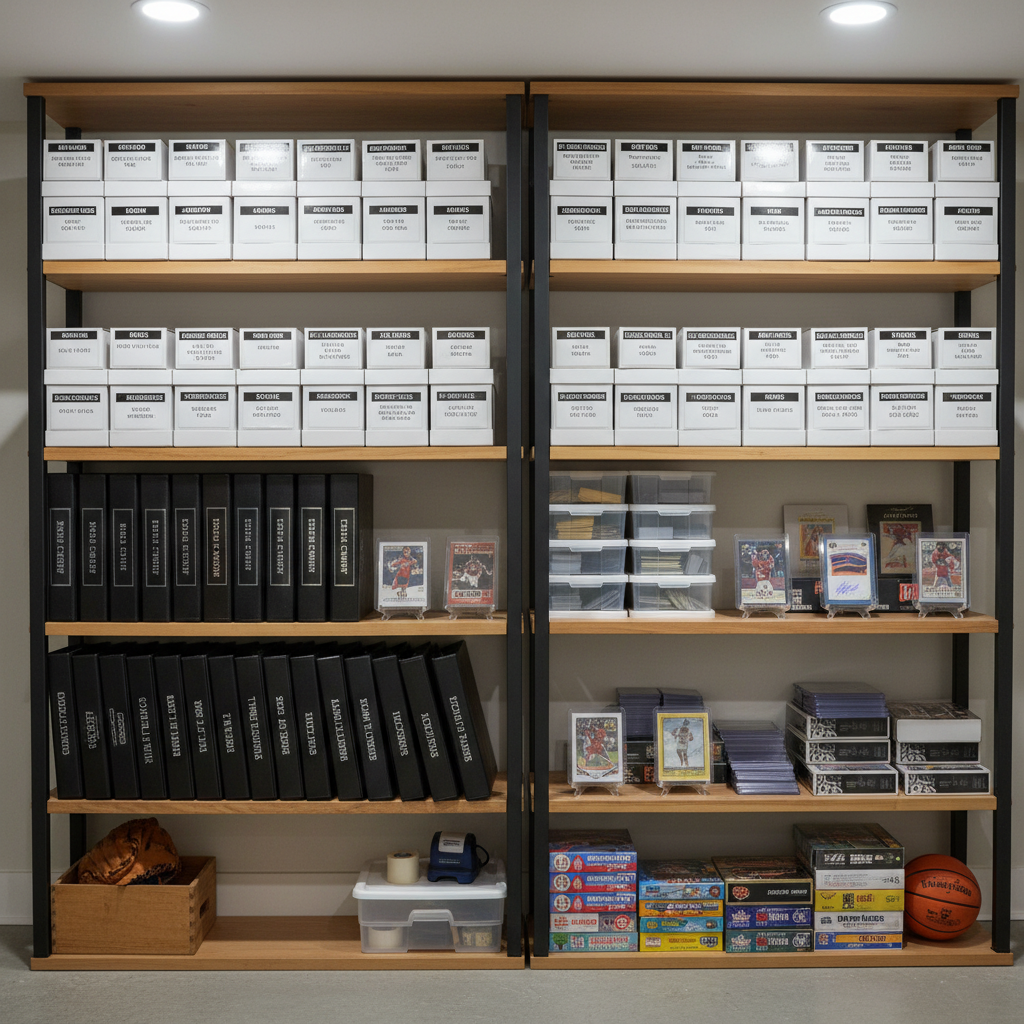
Matt's Monster Basement Hoard: 10,000 Sports Cards and Counting
Joe, still scratching his head over the hobby, likens Matt's burgeoning collection to "kindling." But for Matt, it's a treasure trove – a whopping 10,000 cards meticulously organized in his basement. This isn't just about collecting; it's about preparation for shows, sorting, and knowing what you have in your sports card inventory.
Organization is Key for Sports Card Collectors
- Categorization: Grouping cards by sport, player, and set helps streamline inventory management for any sports card investor or collector.
- Storage Solutions: Leveraging boxes, binders, and top-loaders ensures valuable sports cards are protected and easily accessible.
- Future Potential: A well-organized sports card hoard isn't just storage; it's a future asset ready for grading (PSA, BGS, SGC), selling, or trading. It also helps manage comps and identify hidden gems.
Platform Wars: Whatnot vs. eBay vs. Fanatics Live for Sports Card Collectors
The sports card ecosystem is constantly evolving, with new platforms emerging and old ones adapting. The guys touch upon the nuances of different selling avenues for selling sports cards:
- Whatnot: Known for live auctions, dynamic bidding, and community interaction. Great for quick sales and engaging with buyers, but requires strong showmanship and strategy for optimal sports card pulls.
- eBay: The established giant for both auctions and fixed-price listings, offering wide reach and diverse buyer base for trading cards. Essential for checking comps and reaching specific collectors.
- Fanatics Live: The industry giant's entry into live selling, bringing their market dominance and potential for exclusive content related to sports cards. Still relatively new but expected to be a major player.
Each platform has its pros and cons, and sports card sellers often find success by diversifying their approach and understanding the unique audience of each.

The "Max Shipping" Debate in Sports Card Sales: A Risky Business?
One of the most contentious topics among sports card sellers is "Max Shipping." This strategy involves charging a flat, often higher shipping fee regardless of the number of items purchased, with the promise of refunding excess. While it can streamline checkout, it comes with significant risks for sellers of sports card hits and singles:
- Buyer Backlash: Buyers can get frustrated or feel misled by high initial shipping costs for their sports card orders, leading to abandoned carts or negative feedback.
- Refund Overhead: Manual refunds create extra work and can lead to errors, especially when dealing with numerous card sales.
- Platform Trust: Excessive use might erode trust with buyers and potentially attract scrutiny from platforms like Whatnot or eBay.
The guys discuss scenarios where this strategy might be justifiable (e.g., extremely low-value cards where individual shipping would be prohibitive) versus when it's just a headache waiting to happen. The consensus: clarity and transparency with buyers are always paramount when shipping valuable sports cards and collectibles.
Conclusion: Diving Deep into Sports Card Collecting Nuances
Episode 1 of Wicked Good Pulls was a fantastic dive into the psychology, strategy, and sheer passion that drives the sports card hobby. From dissecting auction dynamics on Whatnot for sports cards to navigating the vastness of a 10,000-card collection and the ongoing debates around shipping, Matt and Mike bring their unique perspectives (and Joe's bewildered commentary) to the forefront. This episode set the stage for many more deep dives and candid discussions on sports card collecting strategies and market trends!
Ready to join Coach Coops and Retro Ripping for more insights on sports cards and collectibles? Tune in for the next Wicked Good Pulls podcast!
Find Us On Whatnot
coachhoops - https://www.whatnot.com/s/X2Id73oC
retroripping - https://www.whatnot.com/s/MFuQRBEy